Wednesday, 28 January 2015


EndPovertyinKenya
 
 
Question 2. What issues would you like World Bank to highlight and which areas do you think would have biggest impact on reducing poverty.
Vision 2030 is Kenya’s development blueprint to transition the country to a middle-income economy by developing the infrastructure, ease accessibility of social services among other areas. The World Bank works in partnership with the country to facilitate the attainment of vision 2030. Being a changed body, the World Bank has resolved to communicate and listen as confirmed by Country Director Diarietou Gaye on an interview with Sunday Live. Thus the success of the country’s development is dependent on the partnerships efforts. Not only do we need development we also need sustainable development in our country. Hence we need to resolve challenges with lasting solutions.
Firstly, it is clear that people in different parts of the country cannot access social services. Or have minimal access to social services. Consequently, strategies to promote availability and accessibility of social services should be formulated. Also, corruption is a bottle neck to development. Hence more strategies need to be created to suspend corruption channels. There is need to empower all citizens with vital socially responsible skills to put to an end to corruption.
Secondly, devolution is magical if citizens can fully benefit from it. For instance, I must regard the development Machakos has experienced since the introduction of county governments. I mean, it must be a challenge posed to the rest of the counties bearing in mind it has at least proved that devolution is a great investment. We should empower leaders who are ready to deliver. And promote development of secondary cities. Rather than being congested in one city leading to creation of avoidable challenges. Policies should be developed to empower citizens to assess leaders based on their delivery while in office. It will aid citizens to avoid mediocrity in leadership. And enhance accountability and transparency.
Also there is need for more resources in the agriculture sector. Food is always scarce in our country. As a result there should be initiatives to empower farmers. Both financially and with basic skills to enable them embrace farming as a viable business idea. We need to generate ideas that can motivate people towards being socially responsible citizens. That is what we can do as citizens to promote development in our society. Existing awards such as Mukuru Awards (http://youthedition.net/vote-for-mukuru-awards-2014-nominees-here/) have seen most people in the region encouraged to participate in development agendum.
In conclusion, I believe education precedes development. It is an expensive investment. Yet the most rewarding of all investments. It is a liberator. It empowers people by replacing an empty mind with an open mind. Thus more resources should be invested in quality education. And technology should be a channel that transforms the society into an information-sharing society. It has reduced the world into a global village! What more can it do to our society and country at large? In addition, we need to promote political maturity in our country. So that people should elect leaders based on delivery rather than tribalism and corruption.
 

Wednesday, 21 January 2015


Seeing beyond the label


It is quite an illusion to avoid labeling a person with disability (PWDs). It is as simple as looking at a person and concluding they are handicapped since they are physically challenged. Mostly, when we meet with a pwd we unconsciously develop an inner attitude of empathy and rush helping them out. Even without their need of our help at times.

It was a while last week when the students with disability (SWD) from the University of Nairobi met in a forum to express their issues to the relevant authorities within the main campus. During the forum, Solomon Odhiambo, a second year student at the School of Medicine expressed the need to sensitize the public about SWDs.

“Since, I am partially impaired I have encountered many people who were very quick to help me even without me asking for this help,” said Odhiambo. “ For instance when I am filling a simple form someone will come and pick it from me even without enquiring if I need help, of course I know it is entirely goodwill but this such acts hurt our ego.” Expounded Odhiambo.

Kelvin Kioko a student from UoN shares the same opinion saying that when a person succumbs to a disability they are taken to special schools where we are taught to be independent persons. We are treated as if we are normal so we adapt to it but the society still has withheld myths about us.
“We heal from the trauma of being disabled but the society never heals.” Affirms Kioko.
The forum spearheaded by Jamleck Njoka,a placement officer at the dean of students office, elicited diverse emotions from the students who turned up from different faculties offered by the institution. Approximately 30 students turned up for the meeting among the roughly 50 students who have been admitted in the University of Nairobi (UoN). 

Njoka addressed issues raised by the students through the kind dialogue that was facilitated by the leadership of the Students with Disability Association. Secretary General for students with disabilities of Students Organization of Nairobi University (SONU) David Mtai promoted the students to talk openly about their issues by assuring them they were the only ones who can make their felt needs known. 


“We are not only doing this for ourselves but also for the students who will join this university later. We will pride ourselves that we were part of the making,” assured Mtai.
Students With Disabilities Association (SWIDA) secretary general, Michael Muigwa, outlined the issues as per the disability. He said that there was need for disability sensitization in all campuses. He added that the students who are visually impaired need their course outline scanned to make it easier for them during revision. He also held that the university should set up platforms such that during their registration they are not subjected to unnecessary torture of making long queues. 

However the students attributed their success to UoN. They emphasized that the institution didn’t kill their interests as compared to other institutions that limit the courses they should pursue. SWIDA acknowledged the University’s effort  with a ranking of 50 per cent in addressing the students with disabilities challenges. They mentioned the university offered students who are visually impaired with laptops and those with hearing disorder with hearing devices. They expressed their sincere gratitude for the university’s effort to accommodate them.

They observed that the University of Nairobi has earned commendable recognition due to their excellent effort to practice the law that governs PWDs rights under the persons with disabilities act of 2003 by the National Council for Persons with Disabilities. The SWIDA Sports Representative, Benson Nderitu, supported his colleagues by adding that the university had plans underway to purchase equipments needed by the students during sports. Wilson Macharia a SWD said that the university means of transport for the SWDs will be ready for use in a short while as it was getting repaired then.

Njoka guaranteed SWDs that after an official report was filed by their leadership he would present it to the dean of students to ensure that their felt needs were addressed. He said that it is true that there is slow progress but sure there all issues will be fully addressed in the future as the institution will also have improved on some of its services. He also commended the leadership of SWDs for their attempt to deliver to their fellow students.

Later, in the afternoon session the students were joined by the representative of Disabilities Mainstreaming Committee (DMC), Susan Oluoch, which deals with the SWDs needs and representation in the institution. She engaged with the students and emphasized on the need for them to register with the committee as part of the SWDs as students were shying away from them. She said that the committee would collaborate with the National Council for Persons with Disabilities through the institution to get financial aid that should cater for their fees and other needs. She said the collaboration will enable the institution to fully adhere to sub article 18, part two of the rights and privilege of persons with disabilities by the council (PWDs Act 2003).

In attendance of the forum were the students’ representatives from the School of Arts and Social Sciences. They also emphasized that the students should improve their interactions with the institutions through them as they reassured them of their full commitment to helping the SWDs to overcome all their challenges.

I must agree that the forum was very informative and educative forum since I met with many SWDs who are independent. In fact they need minimum or no assistance while interacting with the environment provided it is conducive. So may be its time that we let them live life as we live it. Free from unwarranted assumptions and discrimination but help when need be.

Friday, 1 August 2014


Seven ways of managing sibling rivalry

I have been brought up in a family that suffered sibling rivalry. By family I mean the extended one such as aunt, uncle and cousins. Lately, one of my favourite aunts and uncle called a meeting for the youngsters in our family. It was an opening up moment when she gave us fundamental details in dealing with family relationships.

"It is a painful path to take to live in conflict with our very own blood."" she revealed.

Another of my favourite aunt and uncle again (I have learnt that all of them are my favourites). Well, I ain't bragging but my whole of family is awesome. She also had met us as the youngsters in our family and she emphasized on the same.

I have also learnt much from living with my brothers and sisters in the same house in the absence of our parents during our middle age years.
Below are some of the lessons I managed to squeeze out.

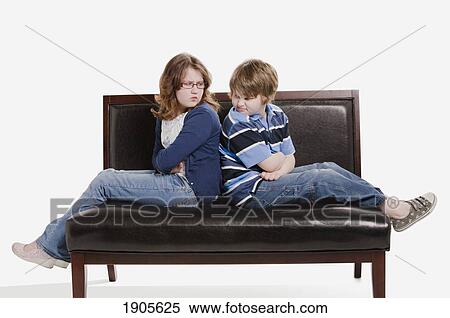
Stock Image - sibling rivalry; edmonton, alberta, canada. Fotosearch - Search Stock Photos, Mural Pictures, Photographs, and Photo Clipart
photo courtesy


1. Love people for who they are
Oftenly, we think that similar background should bore almost same character and worldview. Contrary, to this popular belief you must learn that people will always be unique from others. I mean even twins got different fingerprints, so, just appreciate differences and love people for who they are not who you perceive or desire them to be.


2. Allow people to Evolve
Precisely allow people to change as years fade away. Allow yourself to let other people grow up just like you have. This is very common in first borns. No offence! Please be informed that growth comes with maturity mostly. Please just treat people like adults always.

3. Respect people
I know at time we are quick to judge people and we start labeling them. Consequently, we end up valuing them with a tag like commodities. Those that have expensive tags are respected and those with cheap ones earn no or least respect. Well, truth be said, respect is two way traffic. People will react to how you treat them.


4. Observe courtesy in all situations
As a family you will always experience friction at times. Yes, it isn't abnormal because that is so human. You do not have to allow the worst of situations bring out the worst of you. Self control is a virtue. This applies to good situations too.

5. Use polite language to express your feeling
It is polite to use respectable languages. Words such as Thankyou, welcome and excuse me are a must have. By the way it is honourable to use polite language and very effective too.


6. Be a solution oriented person
This is most applicable during conflicts. Families experience different conflicts and at different levels. Be a solution during such times. At such a time you may be needed not to reveal what you know or vice versa. Selective hearing and talking is very helpful attribute. It is much helpful when these solutions are lasting, Fyi! Yes, that is the power of words.

7. Be a source of encouragement
Finally, I had to add this one. Some of us are great when it comes to self destruction. Some people do not understand the essence of self love. It is too bad since in the abundance of the heart the mouth speaketh. In your great energy you go poisoning people's morale. It isn't right rather you should appreciate other people and inspire them. It is also advisable to cultivate self love in yourself and refrain from self destruction.

This list has space available. so, feel free to add, share and enjoy!

Rosemary..


Wednesday, 16 July 2014


 CAMPUS LIFE

 Joining campus is the dream of every candidate who is preparing for the Kenya Certificate Secondary Examination. It feels like a dream a step away from reality. One creates imagination of what to experience from other people’s perception told to them. A person wonders if ever the joy of being in camps will last forever. 


Personally, I was very excited to join the University of Nairobi to study what I enjoy. Back then was an awesome feeling being new when everyone articulated their genuine kindness. Naively, one would think people are always nice in Campus. At the end of the first semester I found some friends who we shared most qualities. We developed our friendships from group work assigned by lecturers and common sitting partners every time we had a lecture. We enjoyed having lunch together and discussing our examination together.  

The problem with the information I had about Campus was that it was too moisturized. Never once did anyone mention about the overwhelming life of Campus. All of them told me how amusing Campus would be and it would be the best part of my life. Actually, I felt that the people who inform people about Campus life somewhat give misleading information.

Of course it’s amusing to be in Campus and experience Campus life. However it is the most critical part of your life. You either get much of it or the least of it. Many young people in Campus live life like it’s a one- day- event. This is the reason why almost the entire Kenyan population believes that Campus student are ill-mannered and socially rotten. 

This is not the case for all Campus students. Some are self -directed individuals who can be looked up to. Just like any other educational institution, in Campus you find both focused students and mediocre students. The only difference that arises is; in Campus only adults are admitted. This is why there are minimal rules to be followed as the administration treats the students as adults. Therefore we have freedom to choose who we want to be!